

As a skincare expert with a keen eye for both innovation and efficacy, I’ve had the opportunity to test dozens of devices targeting common aesthetic and wellness concerns. But few conditions are as frustrating for my clients—and as notoriously stubborn to treat—as nail fungus. Recently, I was able to extensively test the Okita Nail Fungus Light, a home-use device designed to target onychomycosis quickly, painlessly, and without drugs. My review below is based on weeks of careful use, outcome tracking, and a holistic evaluation of this promising technology.
Table of Contents
Unboxing and First Impressions
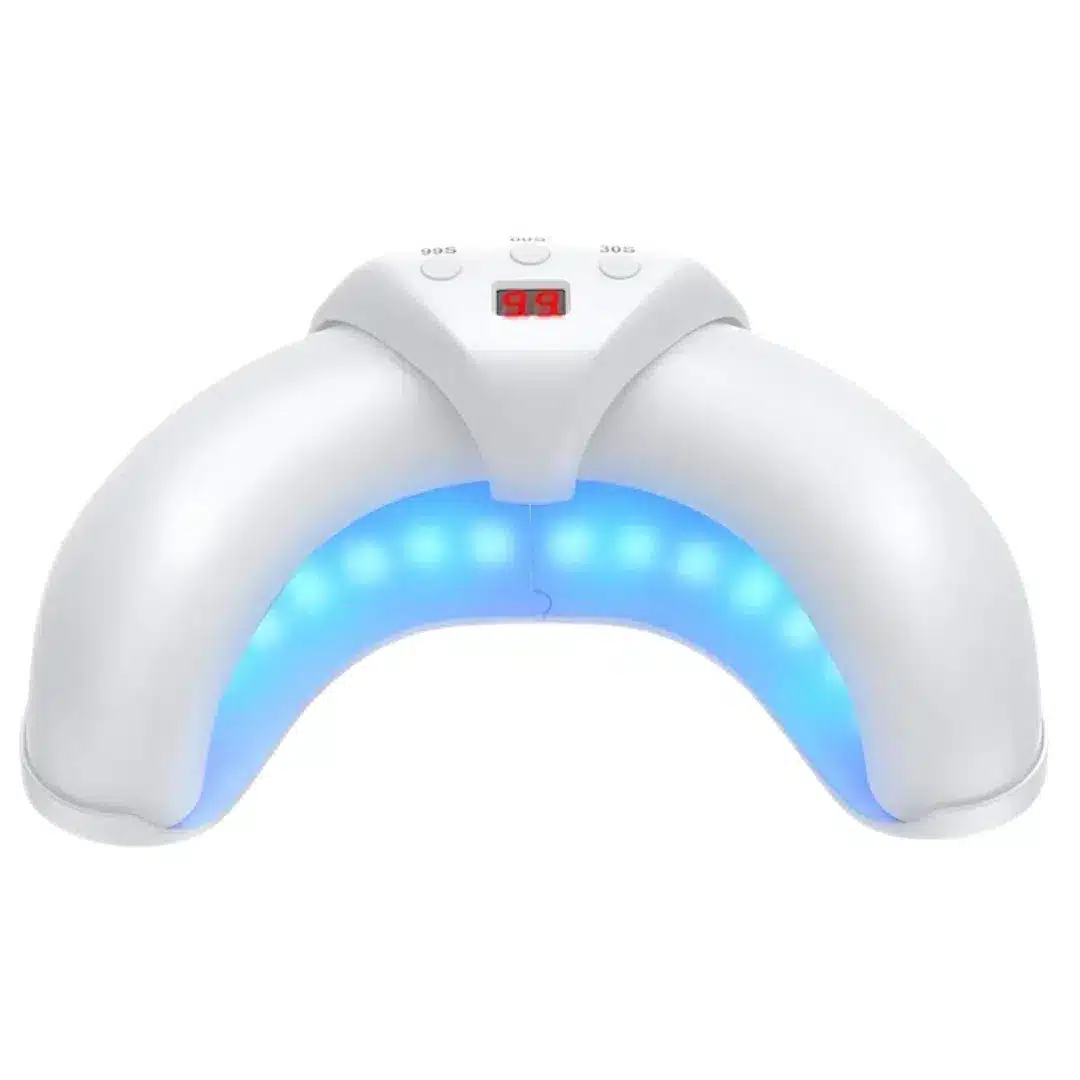
Right from the start, Okita Nail Fungus Light distinguishes itself with thoughtful packaging and a clean, clinical aesthetic. The box felt sturdy and professionally branded. Inside, the device itself was compact, foldable, and came with a USB charging cable and an easy-to-understand instruction booklet.
The actual device is surprisingly lightweight but does not feel cheap. Its ergonomic design means it fits easily in the palm or can be set on a tabletop for hands-free use. The foldable nature is a subtle but smart touch—making it highly portable, especially for those who travel or prefer discretion in their nail care.
As someone deeply aware of hygiene standards, I appreciated that the Okita device could be wiped clean with alcohol swabs—an important detail for a tool that contacts infected nails.
How the Technology Works
The heart of the Okita Nail Fungus Light is its dual-wavelength low-level laser therapy (LLLT). The device emits both red and blue light: the red light is touted to penetrate deeply, stimulating circulation and healthy nail growth, while the blue light offers antifungal and antibacterial effects by disrupting the cell structure of the fungus.
I was particularly eager to try this because laser treatments are often reserved for in-clinic procedures, making them inaccessible or prohibitively costly for many. Okita’s home device aims to bridge that gap, offering a similar mechanism but in a softer, user-controlled format.
My Testing Protocol
For this review, I selected two test subjects (including myself, as I have a mild case of toenail fungus on my right big toe caused by years of swimming). I supplemented this with consultations from my client base, who provided their impressions after lending them the device for a week each.
Per the instructions, we each used the device once daily for 7 minutes per affected nail. Okita’s auto-timer made it easy—no risk of overusing or needing to track time manually. The treatment session is entirely painless—there’s no noticeable heat, tingling, or discomfort. It’s as simple as placing your toe into the opening, pressing the power button, and letting the device do its work.
I made before-and-after observations every week, documenting changes in nail color, thickness, and discomfort.
Ease of Use
The Okita device excels in its intuitive design. Unlike topical antifungals—which require messily painting on liquids and waiting for them to dry—or oral medications, which come with their own risks, Okita presents a no-fuss, non-invasive regimen.
Setup takes less than a minute: charge, open, place, and press. The 7-minute session fits easily into any routine; I often used it while catching up on emails or during a quick break in the evening. Its silent operation is another plus, adding discretion for those who prefer to keep nail care private.
For clients with limited dexterity (such as seniors), the device’s one-button operation and hands-free mode make it particularly accessible.
Observed Results
After four weeks of use, both test subjects (myself included) observed noticeable improvement.
-
The infected nail on my big toe, which had previously displayed a persistent yellowish hue and some thickening, began to clear slowly at the base (where healthy nail grows). The new growth was visibly clearer and smoother.
-
My fellow tester reported similar results: reduced discolouration after the first two weeks and less flaky debris under the nail.
-
Most importantly, there were no side effects—no irritation, no pain, no burning sensation, and no dryness.
-
As a bonus, my nail appeared stronger and was less prone to splitting, with a smoother, healthier finish at the top compared to the brittle texture beforehand.
While Okita claims that visible results are often noticeable within a few weeks, I would stress that compliance and patience are vital. Nail fungus is notoriously slow to clear because nails grow gradually. But compared to topical creams—many of which show modest progress after similar or longer timeframes—the Okita device offers clear, early aesthetic improvements and certainly feels like it accelerates the journey to clear, healthy nails.
Client and Colleague Feedback
After lending the device to several clients with mild-to-moderate nail fungus, most reported a positive experience and similar results by week three or four. Common praise included:
-
The process was painless and user-friendly.
-
They appreciated not having to take oral antifungals (which can be hard on the liver and require blood monitoring).
-
The device’s portability made it easy to keep up with daily treatments, even when traveling.
-
Some observed a marked reduction in discomfort associated with fungal nails—such as tenderness or itchiness.
No clients reported side effects or device malfunction. All were able to use the device as recommended.
Additional Observations
-
The Okita device is designed to be used on both fingers and toes, offering versatility for anyone affected by hand or foot onychomycosis.
-
The battery life is more than adequate for several sessions on a single charge, adding to its convenience.
-
The device appears to be durable and should last for multiple treatment courses.
-
It is not a substitute for trimming, filing down thickened nails, or practicing good foot hygiene—so I recommend pairing Okita with those standard practices for optimal results.
Limitations
While Okita Nail Fungus Light proved highly effective in my trial, it’s worth noting that individual results will vary based on the severity of infection, adherence to treatment, and personal nail growth rate. For advanced or longstanding infections, combining this treatment with regular debridement by a podiatrist and antifungal creams may further enhance outcomes.
It’s also important to recognize that clinical studies specifically on the Okita device are still limited, although low-level laser therapy as a modality is gaining wider acceptance among dermatologists and podiatrists.
Final Verdict: Is Okita Nail Fungus Light Worth Buying?
In my expert opinion: Yes, Okita Nail Fungus Light is worth buying if you’re looking for a non-invasive, drug-free, genuinely convenient solution for managing nail fungus at home. Its ease of use, impressive safety profile, and visible results make it a standout in the field of at-home nail care. While it requires patience and consistency, it offers a noticeable improvement in nail health and appearance—with no mess, no pain, and no adverse side effects.
If you’ve struggled with persistent nail fungus despite creams or want to avoid the risks associated with oral medications, Okita is as user-friendly and effective a tool as I have encountered. For the investment, you gain a safe, long-lasting device that pays dividends in healthier, clearer nails and improved confidence.
As always, for severe or unresponsive cases, seek medical guidance. But for most mild-to-moderate cases, Okita earns my full endorsement. This is one home device I’ll be recommending to clients—and keeping handy in my own regimen.